
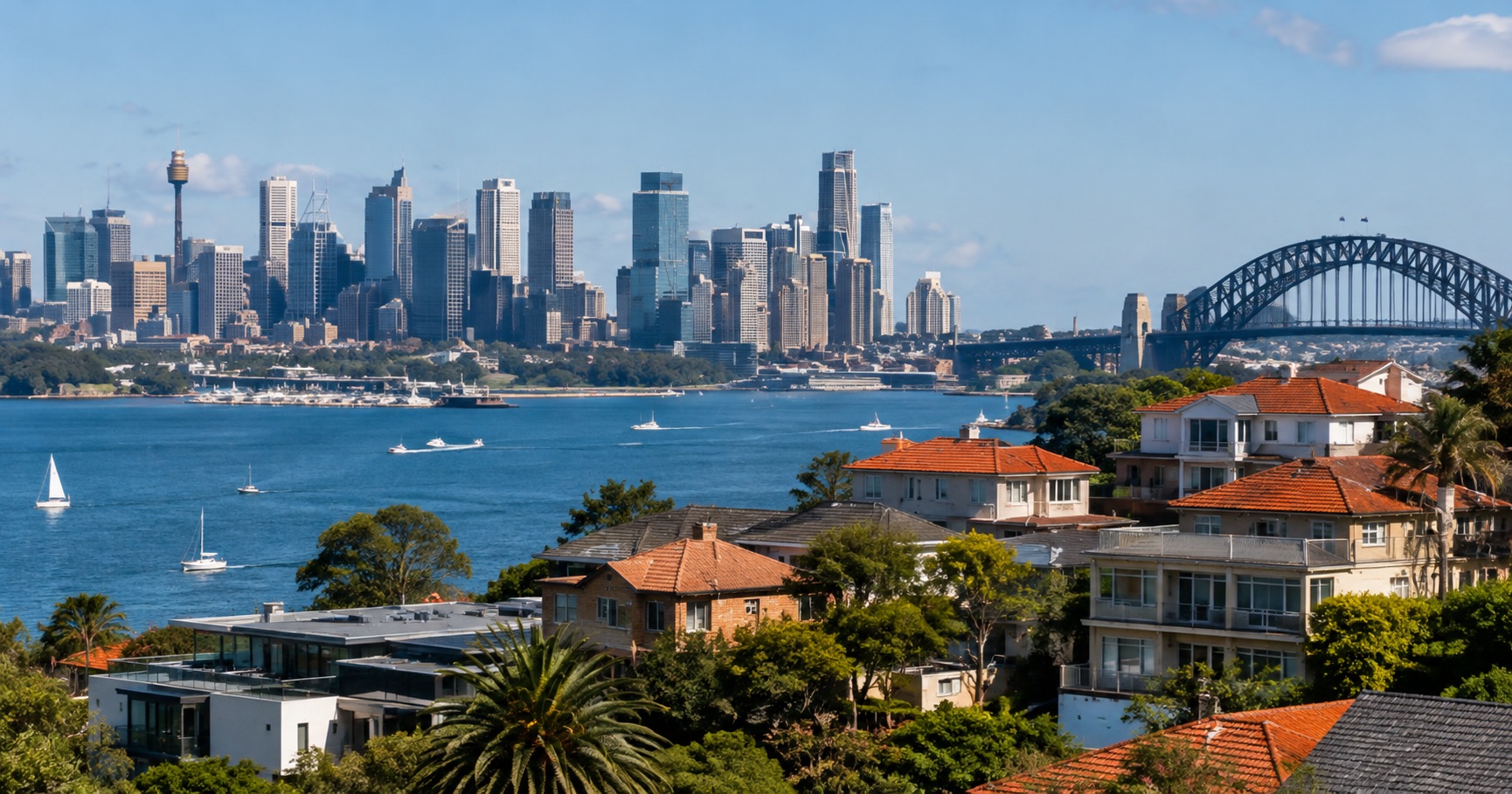
Prestige suburb price falls centred on Sydney and Melbourne
Price weakness in some of Australia’s most expensive residential markets is heavily concentrated in Sydney and Melbourne, with several prestige suburbs recording double-digit falls from recent peaks.
Cotality data prepared for The Australian Financial Review shows North Curl Curl on Sydney’s northern beaches recorded the largest decline among the suburbs highlighted. Its median dwelling value fell 19.4 per cent from a September 2025 peak of $4.1 million to $3.3 million in July.
Other major falls were also recorded in Sydney. Malabar, in the city’s south-east, was down 18.7 per cent, while Wheeler Heights and Point Piper had each fallen by about 17 per cent.
The broader list of affected prestige locations includes Point Piper, Mosman, Vaucluse, Hunters Hill and Woollahra in Sydney, together with Toorak and Kew East in Melbourne.
Sydney and Melbourne dominate the biggest declines
The Cotality figures show the correction has not been evenly spread across the country. Every suburb in the top 50 for price declines from its post-January 2025 peak was located in either Sydney or Melbourne.
The four largest declines specifically identified in the report were all in Sydney. North Curl Curl led the ranking, followed by Malabar, with Wheeler Heights and Point Piper both down by about 17 per cent.
That concentration places Australia’s two largest housing markets at the centre of the current downturn. The reported falls are particularly notable because they include locations described in the report as some of the country’s most exclusive postcodes.
North Curl Curl’s movement illustrates the scale of the adjustment recorded in individual locations. The suburb’s median dwelling value moved from $4.1 million at its September 2025 peak to $3.3 million in July, a decline of 19.4 per cent.
Malabar’s 18.7 per cent fall was the next largest decline cited in the report, followed by Wheeler Heights and Point Piper at about 17 per cent each.
Housing correction enters the rate outlook
Ask a question
The housing downturn is also feeding into expectations for monetary policy.
Economists cited in the report expect the Reserve Bank of Australia to leave the cash rate unchanged at 4.35 per cent when it meets on Monday and Tuesday.
Some economists also said the weaker housing market could reduce the need for the RBA to deliver another cash rate increase. The report said the correction may ease pressure on the central bank to lift rates again.
The figures therefore connect two developments highlighted in the report: declining values in high-priced parts of Sydney and Melbourne, and the outlook for the cash rate.
For now, the Cotality data points to a highly concentrated correction. The sharpest falls identified are clustered in Sydney and Melbourne, with prestige suburbs featuring prominently among the largest declines from their recent peaks.
SOURCE ATTRIBUTION:
Based on reporting by The Australian Financial Review.