
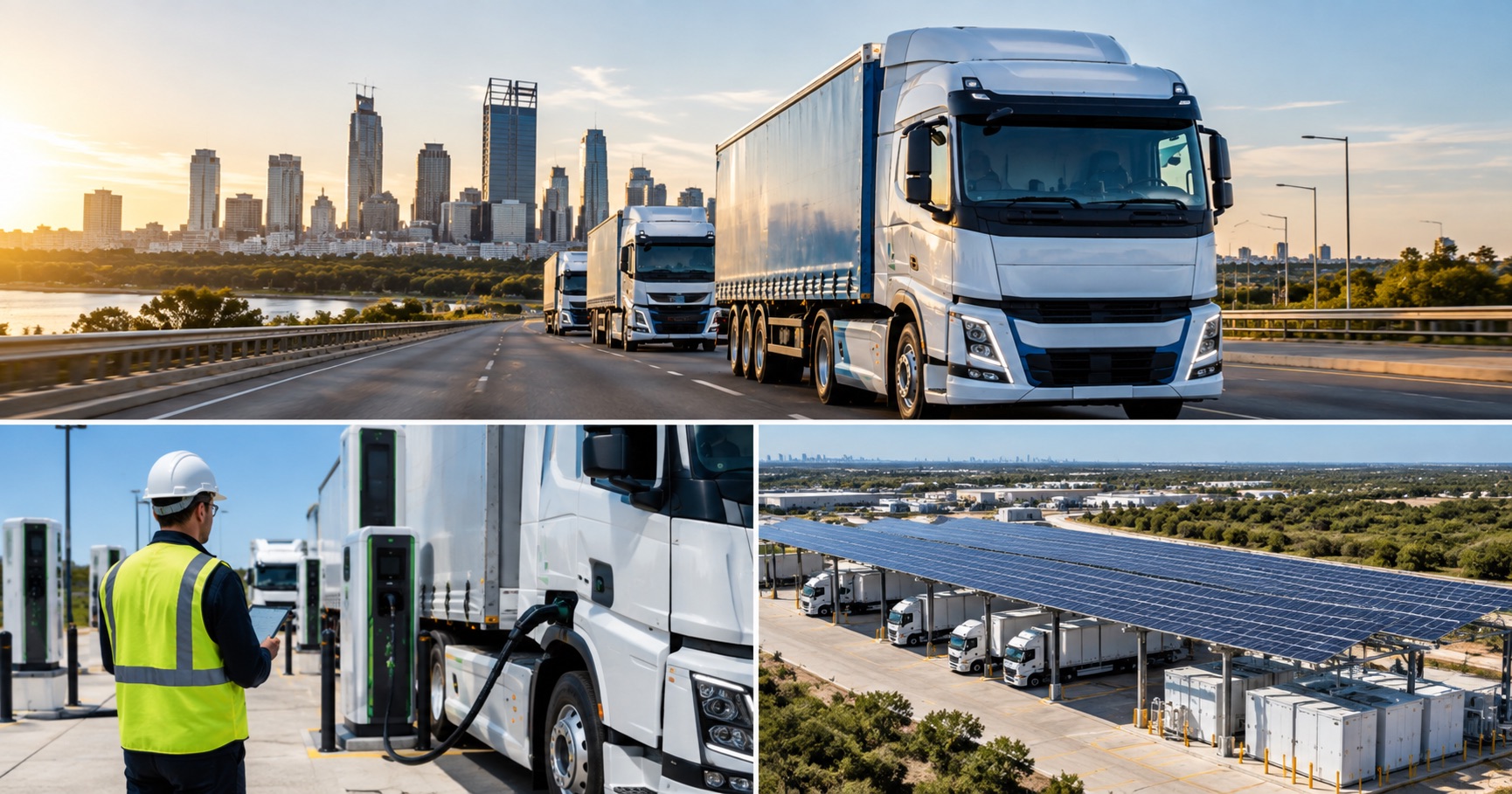
Off-grid electric trucks cut Perth freight emissions
Australian companies are deploying off-grid power, battery storage and data systems to reduce emissions and waste, with Centurion, Zenith Energy and Novecom recognised as the large, medium and small organisation winners in the Financial Review Sustainability Leaders awards.
Centurion, a subsidiary of CFC Group, has built a fully off-grid renewable energy system in Western Australia to power heavy electric freight vehicles. The project combines a 4.4-megawatt rooftop solar array, 10.3 megawatt-hours of battery storage, backup generation and 15 dual chargers.
The system supplies energy to a fleet of 30 electric trucks operating daily metropolitan freight services around Perth. According to CFC Group corporate affairs and sustainability manager Hamish McHaffie, the project was designed in part to overcome grid-capacity constraints that can complicate large-scale electric vehicle charging.
The $36 million initiative was commissioned in July 2025 and received $16.6 million from the Australian Renewable Energy Agency.
Centurion says the system has delivered measurable emissions reductions equivalent to about 1,000 tonnes of carbon dioxide removed from Perth metropolitan heavy transport operations to date. Its emissions calculations are being refined using actual kilometres travelled, fleet telematics and charging data.
Centurion plans further electric truck expansion
Centurion intends to deploy more electric trucks across Western Australia and parts of Queensland, while continuing to develop battery technology and charging infrastructure.
McHaffie said the company could have around 100 electric trucks operating in south-west Western Australia by about 2030, subject to the conditions required for broader deployment.
The project also tracks operational impacts through workforce measures such as driver retention and structured feedback on driver wellbeing and fatigue.
Zenith Energy expands engine-off mining power
Zenith Energy, named the medium organisation winner, is using hybrid microgrids to reduce reliance on thermal diesel and gas generation at remote mining operations.
Its approach allows mine sites to shut down thermal generators for extended periods when renewable generation and storage can meet demand.
Zenith first deployed a hybrid power system at the Nova Nickel Mine in Western Australia’s Fraser Range in 2015. A 5.5-megawatt photovoltaic solar facility was later commissioned in 2019 alongside the site’s 19-megawatt diesel-fuelled power station.
The system resulted in three million litres less diesel being used annually and an estimated reduction of 8,100 tonnes of carbon emissions each year, according to the report.
At Lynas Rare Earths’ Mt Weld operation, about 35 kilometres south-east of Laverton, renewable energy generation reached 95.7 per cent during the third quarter of the 2026 financial year. The hybrid system saved more than 870,000 litres of diesel compared with the same period a year earlier.
Zenith plans to expand engine-off capability through new hybrid power projects and upgrades to existing remote systems over the next one to three years.
Novecom targets hospital waste before it is created
Small organisation winner Novecom is applying sensors, artificial intelligence and cloud analytics to hospital waste.
NSW’s public health system generates about 52,000 tonnes of waste each year, with less than 20 per cent recycled. Novecom’s SureWaste platform uses bin-mounted monitoring nodes to identify discarded items and connect waste information with purchasing decisions.
Early trials found that some hospital consumables were being discarded unused because of over-ordering or changes in clinical requirements.
Within the Hunter New England health network, Novecom identified commonly used surgical consumables that were regularly thrown away unused. Novecom ideation principal engineer Simon Bull said that if the identified trends were addressed across NSW Health, savings could exceed $2 million a year without affecting patient care.
SOURCE ATTRIBUTION:
Based on reporting by The Australian Financial Review, published 3 September 2026. Source: www.afr.com