
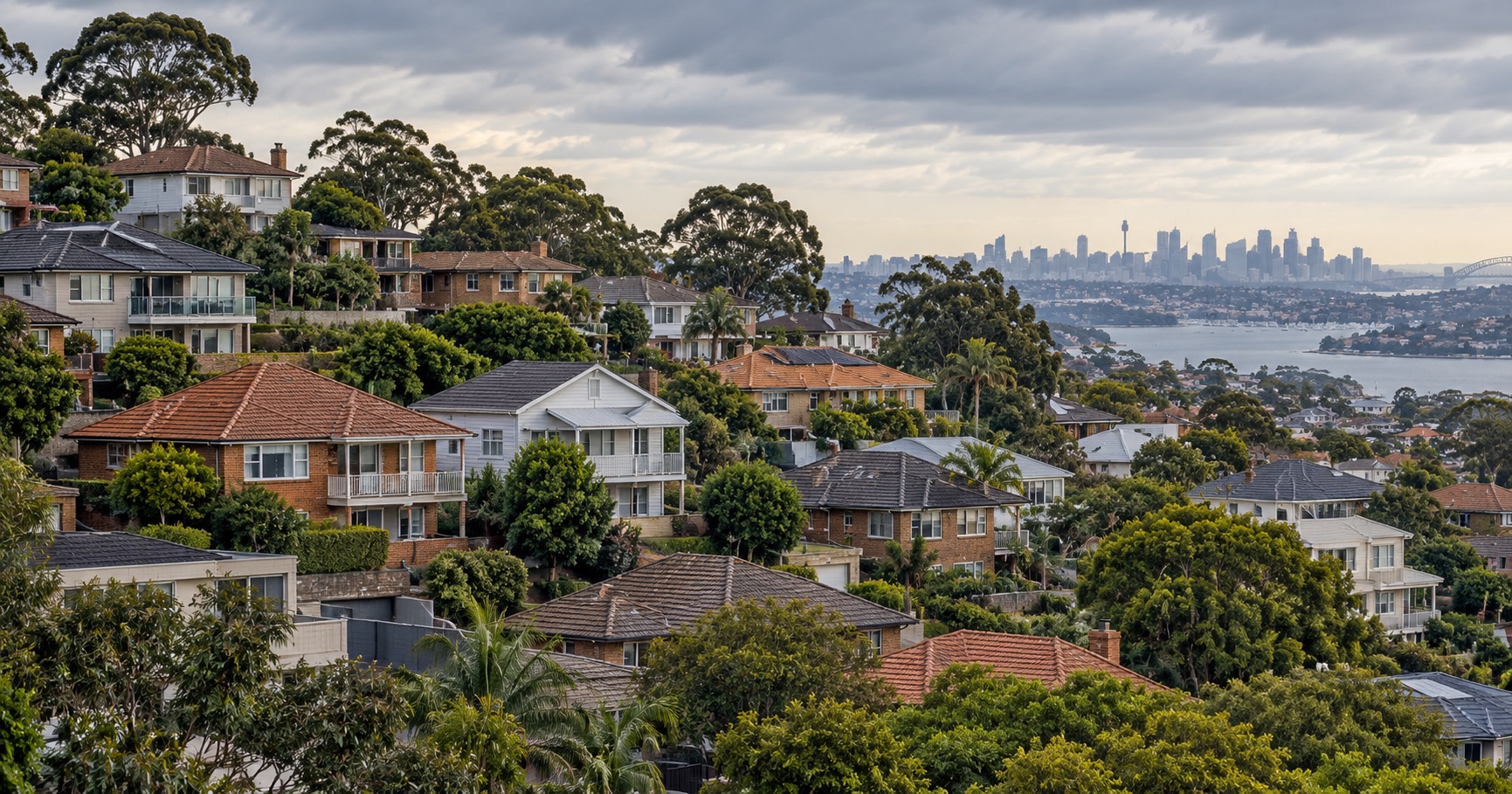
Australian housing downturn accelerates as rates rise
Australia’s housing downturn is gathering pace as higher interest rates weaken borrowing capacity and property values continue to retreat across major capital cities.
Cotality data cited in the report show national residential property values fell 1.1 per cent in September. Brisbane recorded a 1.5 per cent monthly decline and Sydney fell 1.4 per cent, while Adelaide was down 1.3 per cent. Perth fell 1.2 per cent, with Melbourne and Canberra each declining 1.1 per cent.
Sydney’s median dwelling value is now 8.6 per cent below its February 2026 peak, a fall of $112,074. Melbourne is 7.5 per cent below its March peak, while Perth is down 6 per cent. Nationally, dwelling values are 5.2 per cent below their March 2026 peak.
Cotality research director Tim Lawless said combined capital-city values had already fallen 6.4 per cent, or about $66,000, over the past six months. He noted that the previous benchmark downturn involved an 8.2 per cent decline spread across 19 months between 2017 and 2019.
Rate rises add pressure to buyers
The latest September figures did not include the impact of the Reserve Bank of Australia’s rate increase announced on Tuesday. The cash rate was lifted to a 15-year high of 4.6 per cent, and the market was still expecting a further increase.
HSBC chief economist Paul Bloxham said he expected another rate rise in November and forecast national house prices could fall 13 per cent from their peak. The report also cited a 9 per cent peak-to-trough estimate from Commonwealth Bank.
Bloxham said reduced investor demand was contributing to weakness in markets including Perth and Brisbane following changes to property tax arrangements.
Morgan Stanley had also forecast a significant housing downturn, with research published after the May budget estimating national prices could fall by as much as 10 per cent because of higher rates and changes to property tax concessions.
First-home buyers face tighter borrowing capacity
Higher interest rates are also reducing how much prospective buyers can borrow. Following Tuesday’s rate increase, the report said the average couple had $94,700, or 9 per cent, less borrowing capacity than at the start of the year.
That reduction in purchasing power has outpaced the fall in property prices. Credit bureau Equifax reported a 20 per cent drop in first-home buyer applications compared with the same time last year.
The federal government has pointed to its expanded 5 per cent deposit scheme as a way to reduce the upfront barrier for first-home buyers. Prime Minister Anthony Albanese said the program had helped drive 102,500 transactions over 12 months.
However, PropTrack data from June cited in the report showed about 480 households — around 1 per cent of those who accessed the scheme — were in negative equity after the national median property value peaked five months after the program began.
Domain chief economist Nicola Powell said first-home buyers were particularly sensitive to interest-rate changes because the challenge was not only servicing a mortgage, but qualifying for one in the first place.
SOURCE ATTRIBUTION:
Based on reporting by The Australian Financial Review, published 1 October 2026. Source: www.afr.com