
Port of Brisbane virtual energy network lowers power bills
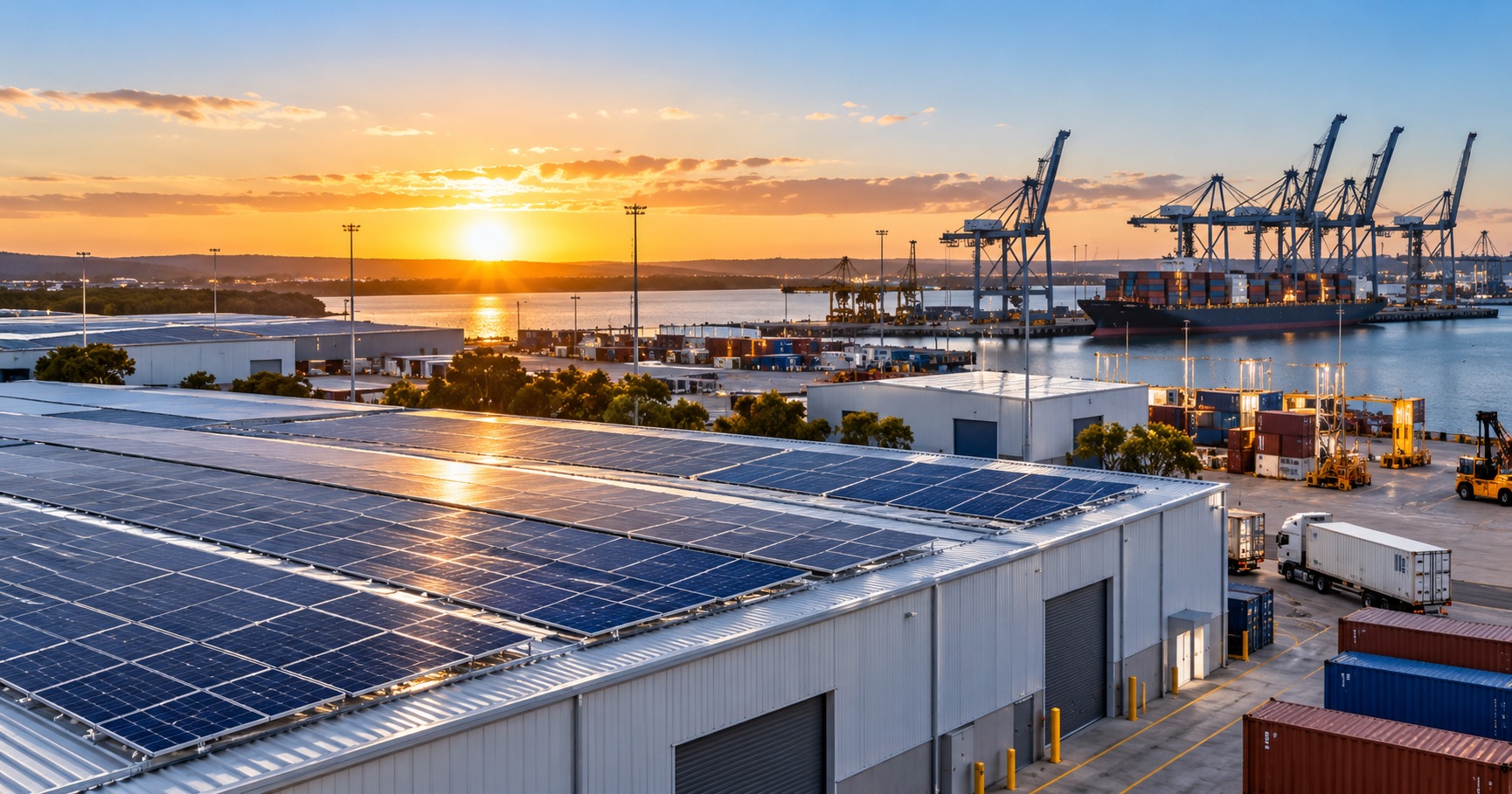
The Port of Brisbane is using a virtual energy network to distribute the financial benefits of locally generated solar power across participating businesses, allowing renewable energy produced at one site to support electricity use elsewhere within the port community.
The system combines solar generation, battery storage and real-time consumption data through an online platform. Rather than physically transferring electricity between individual properties, the network reconciles generation and consumption data across participating sites to calculate costs and benefits.
The Port of Brisbane’s virtual energy network won the logistics and transport category in the 2026 Financial Review Sustainability Leaders awards.
Solar generation shared across port businesses
Port of Brisbane head of sustainability Craig Wilson said the network was opened to third-party customers in July last year. Eleven businesses had joined during the following 12 months, with more of the port’s roughly 80 tenants and customers showing interest.
The Port of Brisbane, which is the port’s landlord, has invested about $5 million in rooftop and ground-mounted solar generation and battery energy storage systems, with further investment planned.
The virtual energy network uses the Enosi Powertracer platform and currently supplies Port of Brisbane Pty Ltd with around 27 per cent of its electricity.
Smart-meter information from participating properties records solar generation and electricity consumption at 30-minute intervals. The platform then reconciles data between sites.
When a location generates more solar power than it requires, the excess electricity is exported to the grid and virtually credited to electricity retailer Momentum Energy. The retailer then supplies electricity to participating port tenants under the virtual network arrangement.
The model allows renewable generation from properties with suitable solar capacity to benefit sites where installing sufficient solar is more difficult.
Warehouse rooftops support renewable generation
The Port of Brisbane has more than 80 leaseholders, including stevedoring companies and other businesses involved in port-related activities.
Its operations also include the Brisbane International Cruise Terminal, a multimodal terminal handling containers moving by rail, a marine operations base and office facilities.
According to Wilson, warehouses generally do not consume large amounts of electricity but offer substantial roof area suitable for solar generation. By contrast, some larger electricity users need significant infrastructure to move containers or load and unload bulk goods but have limited space available for solar installations.
The port has retained certain rights over warehouses built on its land, enabling solar panels to be installed on suitable roofs and other structures. Solar installations are continuing where feasible as part of the company’s energy transition plan and net-zero targets.
Battery storage extends renewable power availability
The Port of Brisbane has also installed 2.3 megawatt-hours of battery energy storage, allowing stored electricity to be supplied after solar generation falls.
Wilson said the company expects to increase battery storage over time alongside further solar installations.
The port’s infrastructure team is working with Energy Queensland to identify locations for new systems that minimise their effect on the wider electricity network.
When local renewable generation is insufficient, including at night or during cloudy conditions, the port automatically draws electricity from the grid. Momentum Energy provides the backup supply required when locally generated power cannot meet demand.
The virtual network therefore allows businesses with different property and energy profiles to participate in a shared renewable-energy arrangement while retaining access to grid electricity when required.
SOURCE ATTRIBUTION:
Based on reporting by The Australian Financial Review.